A common and basic goal of any investor is to earn a profit and to secure the invested funds. However, the whole investment system does not work in a simple linear manner. It comes with a lot of risk factors. These risks include market risks, the risk of scammers, and the risk of illegal activities associated with investment.
From crypto investment scams targeting American investors to changing rules and regulations set by the SEC, it is more important than ever for us to be vigilant in dealing with investments, whether in stocks, cryptocurrencies, or other trending options.
This guide explains what is meant by investment risks, the types of investment risks U.S. investors face in 2026, and how to avoid the most common but costly mistakes.
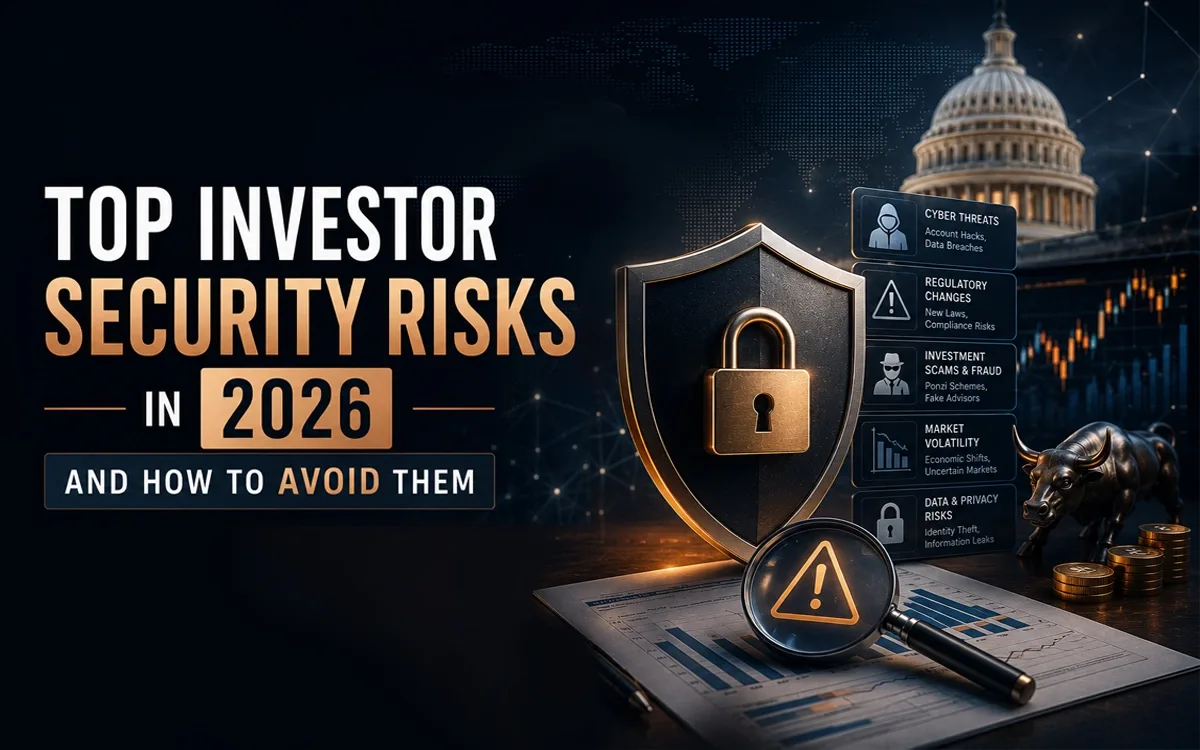
5 Major Investing Security Risks in 2026
To begin with, it is necessary to know the definition of investor security risk. Risk, in finance, can be defined as the level of uncertainty and/or potential for loss of funds associated with an investment decision. Generally, as the level of investment risk increases, the return on investment also increases as a means for investors to compensate themselves for the risk taken. The following is a list of investing security risks that you should be aware of in 2026.

1. Investment Scams
Scammers increasingly tailor their tactics to U.S. investors, using fake SEC-registered platforms, spoofed brokerage emails, and cloned websites of popular investment apps.
How to avoid it:
- Verify registration through SEC’s EDGAR or FINRA BrokerCheck
- Never trust unsolicited investment offers
- Enable account alerts and two-factor authentication
This is one of the fastest-growing investment security risks in the U.S.
2. Crypto Investment Scams and Fake Recovery Services
Investment scams related to cryptocurrencies continue to cause most of the investment loss for individuals. Scammers are promising their victims investments in fake tokens, Ponzi-style staking scams, and recovery scams that demand payment from victims in return for nothing.
How to avoid crypto investment risks:
- Use U.S.-compliant exchanges
- Avoid guaranteed returns
- Be cautious of influencers promoting new coins
3. Regulatory Changes for Investors
In 2026, within the United States, investors will be receiving a tighter regulatory watch from the SEC, CFTC, and IRS. There is a move around crypto, ETFs, and international investing. The regulations can be sudden and alter trading, taxes, and withdrawals.
How to stay prepared:
- Updates from the SEC and the IRS
- Maintain accurate tax records
- To Understand Reporting Requirements for Digital Assets
4. Market Volatility and Risks
Inflationary pressures, changes in interest rates set by the Federal Reserve, and international instability also contribute to volatile price movements. Even favored investments like technology stocks and ETFs have dropped sharply.
- How to Manage Market Risk:
- Diversify between sectors
- Avoid Excessive Leverage
- Emphasis on long-term investing goals
5. Data Breaches and Account Takeovers
U.S. brokerage accounts are frequent targets for hackers. Weak passwords and public Wi-Fi usage increase the risk of unauthorized trades and withdrawals.
How to reduce this risk:
- Use strong, unique passwords
- Avoid accessing accounts on public networks
- Monitor account activity daily
These are the major risks that are expected in the 2026 investment area. These risks are avoidable by the investors by practicing certain security measures.
Types of Investment Risks
Knowing the main types of investment risks helps in protecting your invested capital:

-
Market Risk: Losses Arising from Stock and Bond Price Changes
Market risk is the risk of losing investment due to a change in the overall market conditions. For the United States, stock and bond market prices are significantly affected by decisions made by the Federal Reserve related to raising or lowering interest rates, inflation rates, and earnings, as well as other global events. This means the market is vulnerable to downturns even for a well-diversified investment portfolio.
-
Regulatory Risk: Losses Due to Changes in U.S. Laws or Policies
Regulatory risks are considered to be risks that occur in case of amendments in regulations and laws in the United States, which affect trading, taxation, and holding of investments. Actions taken by various regulatory groups, such as the SEC, CFTC, and IRS, may affect various investments like crypto assets, ETFs, and overseas investments.
-
Cybersecurity Risk: Account Hacks and Data Theft
Cybersecurity risks include the possibility of unauthorized access to investment accounts and the data theft of investment funds and/or personal data. In the United States, online brokerage accounts and crypto storage wallets frequently become victims of phishing schemes, malware, and SIM-swapping scams. Once invested funds are stolen, it becomes extremely challenging to retrieve them.
-
Liquidity Risk: Difficulty Selling Assets Quickly
Liquidity risk is the risk faced by an investor who is unable to sell an asset without sustaining a major loss. There are some investments that have fewer buyers. Stocks of small companies, real estate funds, or crypto tokens lack buyers. Liquidity can also dry up quickly in volatile markets, especially in the U.S.
-
Fraud Risk: Fake Advisors and Scams
Fraud risk entails financial losses emanating from deception. Common frauds in the U.S. include false investment advisors, Ponzi schemes with guarantees of recurrent revenues, and impersonating authorized firms. Fraudsters utilize tactics like urgency and trust to steal money from investors.
Each risk affects investing in financial markets differently.
8 Biggest Mistakes Investors Make
Here are the eight biggest mistakes investors make, according to trends seen in the U.S. market:

1. Falling for Guaranteed Returns
Any form of investment that promises a return or risk-free profit should raise a red flag right away. Markets experience variations, and no matter how high a return is, every form of investment comes with a level of risk, no matter how low. Scams often come about as a result of an investor’s itch for a quick return, which often cannot be achieved.
2. Ignoring SEC or FINRA Warnings
The regulatory bodies, like the SEC or FINRA, issue alert notices related to various scams, unregistered investments, or investments in general that can be risky for the investors. If the alert notices issued by the regulatory bodies are not considered when making investments, then the risk of being caught in scams exists in any case.
3. Putting Too Much Money into One Asset
The overconcentration of money is one of the more common blunders that traders alike must navigate when investing. If a trader invests a significant amount in one stock, digital asset, or financial market, and it declines, that could cause traders to lose a significant amount of money. The diversification effect helps portfolios stabilize.
4. Emotional Trading During Market Drops
Volatility in financial markets may also lead to fearful decisions such as panic selling. Panic selling may hinder one from attaining their financial goals. Financial investors who are successful are not motivated by fear. Financial investors are guided by strategy and data.
5. Chasing Popular Investment Hype
Investing in a trend promoted by social media, an influencer, or even a viral piece of news is a bad idea. Once an investment is popular, the gains achieved are no longer present. The high gains attained at an early stage are likely gone. There is a higher likelihood of a crash following a popular investment.
6. Trusting Unlicensed Advisors
Unlicensed or unverified advisors can, and often do, act outside of the system, and it can be very difficult to get your money back if something goes wrong. Real financial professionals are registered, transparent, and accountable for what they do. Always verify before you place anyone in a position where they have access to your money or personal info.
7. Poor Cybersecurity Habits
Weak passwords, phishing emails, fake investment apps, and poorly secured electronic devices expose investors to cybercriminals. Ineffective cybersecurity can lead to compromised investor accounts, unauthorized withdrawals, and identity theft. The use of strong passwords, two-factor authentication, and well-secured apps can protect investors.
8. Not Understanding Investment Risks
Lack of understanding of the risks that are attached to the investment, like volatility, liquidity, and market downturns, is one common pitfall that leads to poor investment decisions. All investors must have a clear idea of how the investment works, what might go wrong, and whether it fits their financial objectives.
Avoiding these mistakes can significantly reduce losses.
How to Avoid Investment Risks in 2026
Now, let us explore the ways to protect your investments in 2026.

1. Research Every Platform and Advisor
Before investing, it is also essential to authenticate whether the investing platform and advisor are well registered and licensed. Doing this vital work can save you from years of financial loss. For just a few minutes, you can avoid financial despair.
2. Diversify Across Asset Classes
An investment spread across stocks, bonds, property, commodities, etc., also protects against market volatility by ensuring that if any area faces a downturn, it does not seriously affect the other areas.
3. Stay Informed About U.S. Regulatory Changes for Investors
The rules for investing, as well as compliance norms, are dynamic. Keeping yourself informed about updates from various regulatory bodies, like the SEC or FINRA, is advised. This will assist you in avoiding non-compliant investing sites. In addition, regulatory awareness is a prerequisite in crypto, forex, and cross-border investing.
4. Practice Strong Digital Security Habits
Use strong and unique passwords, and implement two-factor authentication. Also, avoid accessing investment accounts on public and unsecured networks. Also, be careful of investment fraud involving fake emails and messages about investment opportunities and account concerns.
5. Avoid Rushing into “Exclusive” Opportunities
Scammers may use false urgency by making claims of “limited-time offers” or “on an invite-only basis.” Real investments give people time to consider the situation and pose questions. When there are any signs of pressure being applied, it is a cue to exit the situation entirely.
Practicing these techniques will surely protect your invested funds. Even after practicing these trends, if you find yourself being scammed, recovery experts will help you out.
New Reality of Investing
For investors, 2026 has both broad prospects and rising problems. Although more markets, digital platforms, and alternative investment vehicles are accessible, so are perils such as crypto-investing scams, cybersecurity threats, market turbulences, and regulatory ambiguities. These challenges face every investor, ranging from novice traders to skilled portfolio managers.
To smartly invest, it is no longer enough simply to want more. A smart investor does more than just want more; he or she is concerned with protecting assets, information, and goals, as well as staying informed about regulatory changes, detecting security risks, diversifying assets, and adopting best practices in digital security, among others. In a marketplace where threats come as fast as profits, protection is no longer a desire but a plan.
Have you been impacted by an investment or crypto-related scam? Act quickly by reaching out to protect your assets and explore recovery options at Legit Assure.
FAQs (Frequently Asked Questions)
What are the main security risks for investors in 2026?
The greatest risks include investing scams, fake investing platforms, unlicensed financial advisors, cybercrime, crypto scams, and market volatility because of global uncertainty.
Why are investment risks increasing in 2026?
Risks are increasing as investment in digital financial systems grows, scams are becoming more sophisticated, cryptocurrency usage increases, and regulations change.
How can investors avoid security risks in 2026?
Investors can avoid risks by conducting research on available platforms and their uses, diversifying investment portfolios, becoming accustomed to regulatory changes, and ensuring robust cybersecurity protection.
How do I safeguard my investments against fraud?
Verify your advisors, avoid guaranteed investment programs, and watch for two-factor authentications and unsolicited offers.
What is the safest investment approach in 2026?
A diversified long-term strategy using a regulated platform and best practices in security appears to be the best and safest way.