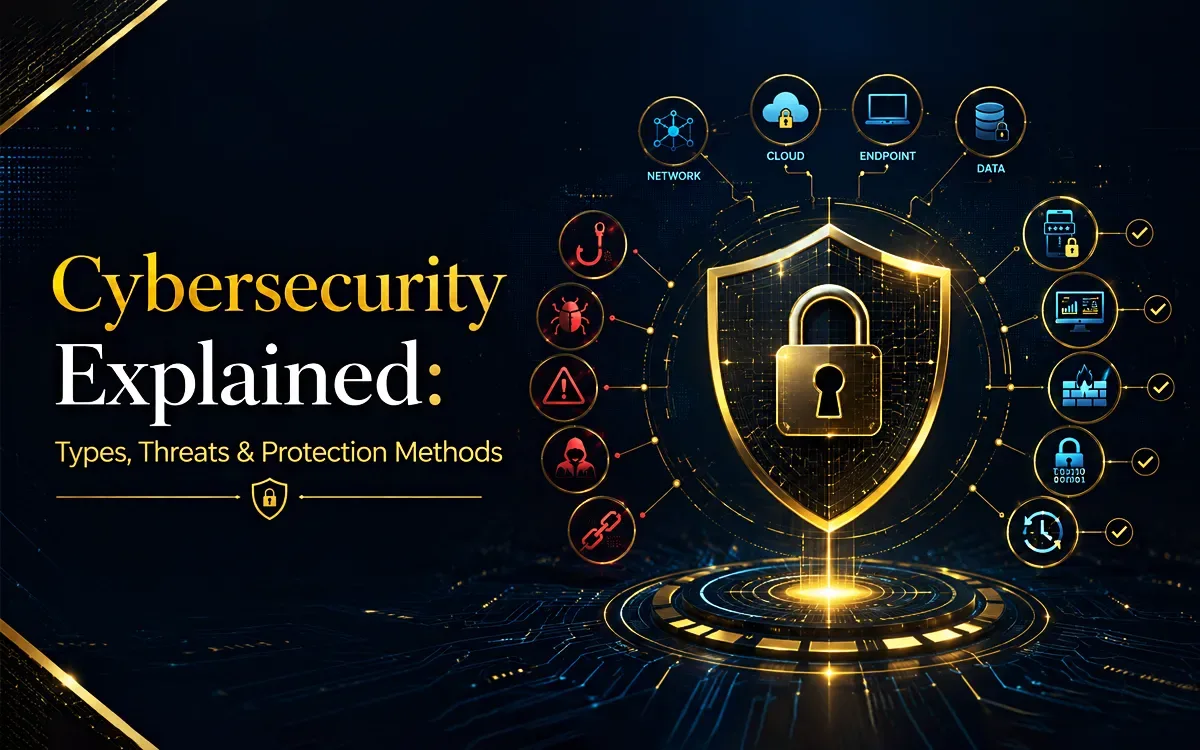
Quick answer
Cybersecurity protects computers, networks, devices, and data from cyber threats. Strong passwords, multi-factor authentication, regular updates, and security monitoring help prevent attacks and protect sensitive information.
Cybersecurity threats are a serious threat that companies are experiencing in this day and age. Companies spend huge amounts of money just to prevent themselves from any forms of cybercrime, such as data breaches, ransomware, and other types of online fraud. A lot of things in our daily lives are conducted over the internet, which is why there is a need to practice cybersecurity.
As per Verizon Business, data breaches continue to pose a serious threat, with almost 2.86 billion credentials being compromised in 2025. Phishing accounts for more than 50% of all attacks, the malware landscape continues to change, and insiders cause 19% of all security incidents.
Understanding cybersecurity is the first step toward staying safe in today’s connected world. This guide explores cybersecurity, its importance, and how it helps protect against modern cyber threats.
What Is Cybersecurity in Simple Terms?
Definition of Cyber Security: Cyber security refers to the measures undertaken to ensure protection against cyber threats and any form of unauthorized access to computers, networks, hardware/software, and data. The main aim of cybersecurity is to ensure that digital resources are secured, reliable, and safe.
Just as locks, alarms, and security systems protect physical assets, cybersecurity safeguards digital environments. It relies on a combination of technologies, policies, processes, and best practices to defend against evolving cyber threats and ensure safe online activities.
Why Is Cybersecurity So Important in 2026?
New developments are taking place in the field of technology at an incredible pace. Similarly, cyber threats are also becoming advanced and evolving quickly. Today’s organizations rely heavily on cloud computing and cloud-based services, remote working environment, mobility, and other types of connected technology to facilitate their operations. While there are numerous benefits of technology in today’s age, it also creates vulnerabilities in terms of cybersecurity.
Cybersecurity is crucial not only in terms of keeping passwords safe but has much more value than that. Good cybersecurity allows organizations to protect themselves from various attacks and cyber risks by keeping their information secure, maintaining client satisfaction, minimizing costs, ensuring compliance, and allowing them to operate freely without any disruptions.
There are multiple reasons why cybersecurity will remain significant for organizations in 2026:
- Increasing use of cloud computing and remote work.
- Advanced ransomware attacks and phishing attempts.
- Highly developed connected devices and IoT technology.
- Increasing incidents of identity theft and fraud.
- Use of digital banking and financial applications.
A single cyber incident can lead to operational disruptions, data breaches, financial damage, and reputational harm, making cybersecurity a critical business priority.
How Does Cybersecurity Work?
Knowing the basics of cybersecurity makes it easy to understand the importance of cybersecurity. Cybersecurity involves technology, processes, and people to form several layers of protection. The layers work together to identify, protect, and react to threats in order to prevent any damage from happening.
The usual process involved in cybersecurity includes:
- Detecting any abnormal network activities.
- Blocking any unauthorized access.
- Encrypting important information.
- Identifying user authentication.
- Detracting malwares and viruses.
- Reacting to any cybersecurity incident.
Organizations do not depend on one security solution to be secure. Instead, they integrate various security solutions such as technology, policy, monitoring system, and access control in order to achieve security.
Understanding the 6 Main Types of Cybersecurity
Cybersecurity covers several specialized areas. Each type focuses on protecting a specific part of a digital environment.
1. Network Security
Network security focuses on protecting these networks from unauthorized access, intrusions, and cyber attacks. Security teams use firewalls, intrusion detection systems, traffic monitoring tools, and network segmentation to strengthen defenses. Network segmentation divides a network into smaller sections, helping contain threats and prevent attackers from moving freely across systems.
Together, these measures block unauthorized access, detect suspicious activity, and reduce overall security risks. As cyber threats become more sophisticated, network security remains a critical component of any cybersecurity strategy.
2. Application Security
Today’s business organizations use various software applications to perform day-to-day operations. However, application software becomes a target of attacks by cyber attackers who exploit weaknesses in applications. Application security is associated with the identification of application security risks and vulnerabilities and their mitigation through the application of security measures during development.
Moreover, application security can help in preventing security threats that could lead to data breaches through application vulnerabilities.
3. Cloud Security
The emergence of cloud computing technologies revolutionized information management processes in business organizations. However, with cloud computing technologies, new security challenges arise, and businesses must address cloud security issues related to protection of cloud applications and cloud infrastructure from attacks and intrusion attempts. Some of the security measures used in cloud environments include encryption.
The issue of cloud security has become very important due to the continuous migration of data and applications to the cloud.
4. Endpoint Security
Each endpoint connected to the network is another possible way into the system. Endpoint security safeguards devices like laptops, desktops, smartphones, tablets, and others used in the network. Security software detects and blocks malware and oversees device activities.
With employees becoming more mobile and accessing systems from different endpoints, endpoint security has emerged as one aspect of cybersecurity that needs attention.
5. Identity and Access Management (IAM)
Identity and Access Management (IAM) helps organizations ensure that only authorized users can access specific systems, applications, and sensitive data. By verifying identities and assigning access based on job roles and responsibilities, IAM minimizes the risk of unauthorized access, insider threats, and accidental data exposure.
Effective IAM practices also improve security, compliance, and overall control over digital resources.
6. Information Security Basics
The basis of cybersecurity is based on securing information. The basics of information security revolve around ensuring the confidentiality, integrity, and availability of information. The above-mentioned three aspects of information security are also referred to as the CIA Triad. The aspect of confidentiality means that only authenticated people have access to information. Integrity refers to safeguarding the data from being altered.
Availability ensures that the information and system are available.
10 Dangerous Cyber Threats to Watch Out For
You must know a few common types of cyber threats before moving towards the solution. To find an apt solution, one must know how to identify the problem.
1. Malware
Malware, short for malicious software, is designed to damage systems, steal information, or disrupt operations. Cybercriminals distribute malware through infected websites, email attachments, software downloads, and removable devices. Common types include viruses, worms, trojans, ransomware, and spyware. Effective security software and regular updates help reduce malware-related risks.
2. Phishing
Phishing is a cyberattack that tricks users into revealing sensitive information by impersonating trusted organizations. Attackers use convincing emails, messages, or websites that appear legitimate. Victims may unknowingly share passwords, banking details, or personal information. Security awareness, careful verification, and multi-factor authentication help protect against phishing attempts.
3. Password Attack
Password attacks aim to gain unauthorized access by stealing, guessing, or cracking user credentials. Common methods include brute-force attacks, dictionary attacks, credential stuffing, keylogging, and phishing. Weak or reused passwords increase vulnerability. Strong passwords, password managers, and multi-factor authentication significantly improve protection against password-based cyber threats and attacks.
4. DoS and DDoS
Denial-of-Service (DoS) and Distributed Denial-of-Service (DDoS) attacks overwhelm servers or networks with excessive traffic. This prevents legitimate users from accessing services. DDoS attacks use multiple compromised devices simultaneously, making them harder to stop. These attacks can cause downtime, financial losses, and significant damage to organizational reputation.
5. Man-in-the-Middle (MITM)
A Man-in-the-Middle attack occurs when cybercriminals secretly intercept communication between two parties. Attackers can monitor conversations, steal sensitive information, or alter transmitted data without detection. These attacks often target unsecured networks and public Wi-Fi connections. Encryption and secure communication protocols help minimize MITM attack risks effectively.
6. Malvertising
Malvertising involves using malicious online advertisements to spread malware or redirect users to harmful websites. Attackers place infected ads on legitimate advertising platforms, making them appear trustworthy. Users may become infected simply by clicking an advertisement. Ad blockers, updated browsers, and cautious browsing help reduce malvertising threats significantly.
7. Social Engineering
Social engineering exploits human psychology rather than technical vulnerabilities. Attackers manipulate victims through trust, fear, urgency, or curiosity to obtain sensitive information or gain unauthorized access. Techniques include phishing, baiting, pretexting, and impersonation. Employee awareness training and verification procedures are essential defenses against social engineering attacks today.
8. Ransomware
Ransomware is a type of malware that encrypts files or locks systems, preventing access until a ransom is paid. Victims often receive payment demands in cryptocurrency. These attacks can disrupt operations and cause financial losses. Regular backups, security updates, and employee awareness help reduce ransomware-related risks significantly.
9. SQL Injection
SQL injection attacks target vulnerable web applications by inserting malicious SQL commands into input fields. Attackers exploit poor input validation to access, modify, or steal database information. Sensitive customer records and financial data are common targets. Secure coding practices and proper input sanitization help prevent SQL injection attacks.
10. Advanced Persistent Threats (APTs)
Advanced Persistent Threats are highly sophisticated cyberattacks where attackers gain unauthorized network access and remain undetected for extended periods. APT groups are often well-funded and target governments, corporations, or critical infrastructure. Their objectives include espionage, data theft, and sabotage. Continuous monitoring and strong security controls are essential.
These threats target systems, networks, and sensitive information.
What are the Cybersecurity Protection Methods?
Protecting digital assets requires a combination of technologies and security practices. Several proven cybersecurity protection methods help reduce risks and strengthen defenses.
-
Firewall and Encryption
Firewall and encryption technologies form the backbone of many security programs. Firewalls look over and control network traffic based on security rules. They help block unauthorized access and suspicious activity. Encryption converts information into unreadable code, making data useless to unauthorized parties. Even when intercepted, encrypted data remains protected. These technologies work together to create stronger security layers.
-
Multi-Factor Authentication
Passwords alone are no longer enough. Multi-factor authentication requires more verification methods, such as mobile codes, security keys, or biometric scans. This extra layer significantly reduces the risk of account compromise. Many organizations now consider multi-factor authentication an essential security measure.
-
Security Monitoring
Threats can emerge at any time. Regular monitoring helps organizations identify unusual behavior and address security issues quickly. Advanced monitoring systems use automation and AI to recognize potential threats and support faster incident response. Early detection often prevents minor security events from becoming major breaches.
-
Regular Software Updates
Software updates and security patches fix vulnerabilities that cybercriminals actively target. Keeping operating systems, applications, and security tools updated helps prevent malware infections, unauthorized access, and data breaches. Regular patch management strengthens cybersecurity defenses and reduces the risk of successful cyberattacks.
5 Cybersecurity Best Practices To Follow
Strong cybersecurity depends on both technology and human behavior. Following proven cybersecurity best practices helps reduce exposure to common threats.
-
Use Strong Passwords
Strong, unique passwords are one of the most effective defenses against unauthorized access. Passwords should combine letters, numbers, and special characters while avoiding predictable information. Using a password manager helps generate and store secure credentials. Regularly updating passwords and avoiding reuse across multiple accounts further reduces the risk of compromise.
-
Stay Alert for Phishing Attempts
Phishing attacks trick users into revealing sensitive information through fraudulent emails, messages, or websites. Cybercriminals often impersonate trusted organizations to gain credibility. Carefully reviewing links, verifying requests through official channels, and avoiding suspicious attachments can help prevent credential theft, financial fraud, and unauthorized access to systems and accounts.
-
Backup Important Data
Regular backups protect valuable data from ransomware attacks, hardware failures, accidental deletion, and other unexpected events. Backups should be stored securely in separate locations and tested periodically to ensure successful recovery. A reliable backup strategy minimizes downtime, supports business continuity, and enables organizations to restore critical information quickly.
-
Limit Access Privileges
Not every employee requires access to every system or dataset. Role-based access controls ensure users only have the permissions necessary for their responsibilities. Restricting access reduces the risk of accidental exposure, insider threats, and unauthorized activity. It also limits potential damage if an account becomes compromised during a cyberattack.
-
Stay Updated on Security Threats
Cyber threats evolve rapidly as attackers develop new techniques to exploit vulnerabilities. Organizations should stay informed through trusted cybersecurity resources, threat intelligence reports, and industry updates. Applying security patches promptly and monitoring emerging risks helps strengthen defenses. Staying proactive enables businesses to identify threats early and reduce potential security incidents.
For businesses and individuals seeking additional guidance,LegitAssure provides cybersecurity awareness resources, blockchain intelligence services, digital risk assessments, and access to legal support networks for matters involving online fraud, suspicious platform activity, phishing, unauthorized wallet access, and other digital security concerns.
Access control remains a fundamental cybersecurity principle.
Cybersecurity Matters More Than Ever
The digital world continues expanding, bringing both opportunities and risks. Businesses, governments, and individuals depend on technology for communication, transactions, and daily operations.
Cybersecurity plays a vital role in protecting sensitive information and maintaining trust in digital systems. As cyber threats continue to evolve, strong security measures have become a necessity for businesses and individuals alike.
Organizations that prioritize cybersecurity are better equipped to reduce risks and protect valuable data. Contact LegitAssure for expert guidance and support.
FAQs (Frequently Asked Questions)
What is cybersecurity in simple words?
Cybersecurity is the process of protecting computers, networks, devices, and data from cyber attacks, unauthorized access, and other online threats.
What are the main types of cybersecurity?
The main types of cybersecurity include network security, application security, cloud security, endpoint protection, identity and access management (IAM), and information security.
What are the biggest cybersecurity threats today?
Some of the most common cybersecurity threats include malware, ransomware, phishing scams, data breaches, insider threats, and credential theft.
Why is cybersecurity important for businesses?
Cybersecurity helps businesses protect sensitive data, reduce financial risks, maintain customer trust, meet regulatory requirements, and keep operations running smoothly.
How can individuals protect themselves from cyber attacks?
Individuals can strengthen their online security by using strong passwords, enabling multi-factor authentication, keeping software updated, avoiding suspicious links, and backing up important data regularly.