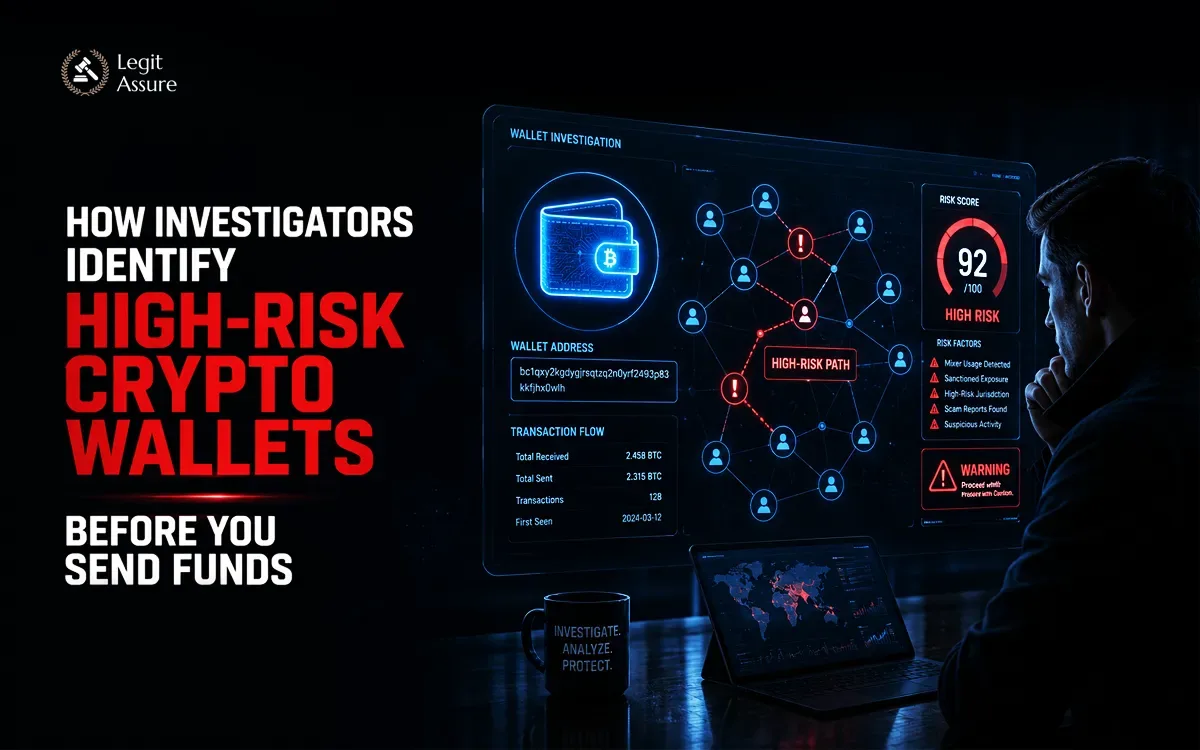
Every crypto wallet comes with a unique address. As one may notice initially, the crypto address seems to be a string of letters and digits. However, it actually is much more, as there is a transaction history stored in the address showing the activities of this particular wallet on the blockchain. The data becomes increasingly relevant with the rise in cryptocurrency risk factors. For example, according to blockchain analytics research, at least $154 billion was transferred to illicit crypto addresses in 2025.
Such transaction history is an essential source of information when investigators search for any potential risks associated with cryptocurrencies. Investigators utilize blockchain intelligence to analyze this information and define whether a particular wallet should be regarded as a threat. They do not focus on the owner of the wallet but rather on the actions performed by the wallet itself and money movements.
Identifying these warning signs will allow investors to make more conscious decisions about sending their cryptocurrency. Moreover, it will explain why there are high-risk crypto wallets and what separates them from other wallets. In this guide, you’ll learn how investigators identify high-risk crypto wallets, what makes a wallet appear suspicious, and the steps you can take to protect your digital assets better.
What Is a High-Risk Crypto Wallet?
The wallet does not automatically qualify as high-risk based on its name, size, or the amount of digital currency stored in it. Risk levels normally vary depending on the transactional activity of the wallet, its connections with other wallets on the blockchain network, and transactional history.
High-risk crypto wallets are wallets that exhibit suspicious activities and transactions within the blockchain network. For instance, wallets that receive transactions from fraudulent addresses, make frequent transactions across several wallets, or interact with risky platforms could be identified as having high-risk levels.
It is worth noting that the high-risk status of the wallet does not necessarily imply that the wallet is associated with criminal activities. Various signals need to be evaluated before any judgment can be made about a particular wallet.
Common features that can increase the risk of a wallet theft include the following:
- Previously reported suspicious wallet addresses are linked.
- A pattern of incoming and outgoing transactions that is different than usual.
- A large number of transfers from one wallet to another.
- A lack of connections with trusted or questionable platforms.
- Attempt to conceal the source of funds or money.
The main difference between the crypto wallet and conventional bank accounts is that the crypto wallet is based on the public blockchain. This allows investigators to check transactions and look for trends in the transactions that could indicate potential risks.
To gain an understanding of suspicious wallet activity, it’s necessary to know what constitutes a high-risk wallet.
Why Do Investigators Analyze Crypto Wallets?
A crypto wallet address may look like a simple combination of letters and numbers, but it can reveal a detailed history of activity on the blockchain. Investigators analyze these records to understand where funds come from, where they move, and whether a wallet is connected to risky activity.
Wallet analysis is used for several reasons, including:
-
Tracking Suspicious Transactions
Investigators examine transaction patterns to identify unusual activity, such as large transfers, rapid movement of funds, or repeated connections between multiple wallets. These patterns can help reveal whether a wallet requires further review.
-
Identifying Connections Between Wallets
A single wallet rarely tells the full story. Investigators often analyze groups of connected wallets to understand how funds move across the blockchain. This can reveal links between addresses that appear unrelated at first.
-
Supporting Crypto Compliance Checks
Cryptocurrency exchanges, financial institutions, and businesses use wallet analysis to meet compliance requirements. Checking wallet activity helps them identify addresses associated with known risks before processing transactions.
-
Investigating Crypto-Related Incidents
When cryptocurrency is stolen or sent to suspicious addresses, investigators can follow the movement of funds across the blockchain. This helps create a clearer picture of how assets moved after a security incident.
-
Assessing Wallet Risk Before Transactions
Wallet analysis is not only used after a problem occurs. Investors, businesses, and platforms can review wallet activity before sending funds to better understand potential risks.
Blockchain transactions are recorded permanently, which means investigators can study past activity and identify patterns that may not be visible from a single transaction. This makes wallet analysis an important part of understanding crypto security and reducing exposure to high-risk addresses.
How Investigators Identify High-Risk Crypto Wallets
Investigators don’t decide that a wallet is high-risk based on one transaction or a single red flag. Instead, they build a complete picture by analyzing how the wallet behaves over time and how it interacts with other addresses on the blockchain.
Think of it like putting together a puzzle. One piece rarely tells the whole story, but when multiple warning signs appear together, they can reveal whether a wallet deserves closer attention.
Here are some of the key indicators investigators look for.
-
Unusual Transaction Patterns
One of the first things investigators examine is how money moves in and out of a wallet.
For example, a wallet that suddenly receives a large amount of cryptocurrency and quickly sends it to several other wallets may raise concerns. The same applies to wallets that process hundreds of transactions within a short period without a clear purpose.
While these patterns don’t automatically mean something is wrong, they often prompt a deeper investigation.
-
Connections to Known High-Risk Wallets
Blockchain transactions create a network of connected wallet addresses. By following these connections, investigators can determine whether a wallet has interacted with addresses that have already been linked to scams, stolen funds, or other suspicious activity.
A single connection is not enough to label a wallet as high-risk. However, repeated interactions with known risky wallets can increase its overall risk score.
-
Rapid Movement of Funds Between Multiple Wallets
People often move crypto between their own wallets for legitimate reasons. However, investigators pay attention when funds are transferred through a long chain of wallets within a short time.
This technique is commonly used to make transactions harder to follow. Instead of leaving funds in one place, they are split, combined, and moved repeatedly to create a more complex transaction trail.
-
Use of Mixing Services
Some services are designed to mix cryptocurrency from many users before sending it back to different wallet addresses. This makes it more difficult to trace where the funds originally came from.
While there are legitimate reasons someone may use a mixing service, investigators often treat these transactions as higher risk because they reduce transparency and make blockchain analysis more challenging.
-
Interactions With High-Risk Platforms
Investigators also examine where a wallet sends and receives cryptocurrency.
For example, a wallet that regularly interacts with addresses linked to fake investment platforms, phishing campaigns, or unregulated services may require additional review. Looking at these relationships helps investigators understand whether the wallet is part of a larger network of suspicious activity.
-
Wallet Behavior Over Time
A wallet’s history is often more valuable than a single transaction.
Investigators look for long-term patterns, such as how often the wallet is active, the types of transactions it makes, and whether its behavior changes suddenly. A wallet with years of consistent activity generally tells a different story than one created just hours before moving large amounts of cryptocurrency.
-
Risk Scores Built From Multiple Signals
Professional investigators don’t rely on one warning sign to decide whether a wallet is high-risk. They combine many factors, including transaction history, wallet connections, fund movement, and blockchain behavior, to build an overall risk assessment.
This approach helps reduce false alarms and provides a more accurate picture of the wallet’s activity.
Can You Assess Wallet Risk Yourself?
There are some simple checks to do before sending cryptocurrency, and while the professional investigators employ advanced tools for blockchain intelligence, you can still do some of those.
First, check out the wallet’s transaction history on a blockchain explorer. Watch for unusual activity like multiple large transactions or quick transfers between many different wallets or addresses that have been publicized as suspicious. Additionally, some blockchain analytics applications have a reputation or risk metrics for wallets derived from blockchain data that is publicly available.
These checks won’t provide the same level of insight as a professional investigation. To find connections that are not immediately apparent, experts use transaction analysis and other blockchain intelligence tools, such as wallet clustering and behavioral patterns.
Despite this, it is always worthwhile to spend a few minutes checking a wallet before transferring funds, as you will be able to pick up on a few potential warning signs and make an informed decision.
How to Choose a Safe Crypto Wallet
Choosing a secure wallet is one of the best ways to protect your cryptocurrency. However, it’s important to understand what a wallet can and cannot do. Even the most secure wallet cannot stop someone from voluntarily sending funds to a fraudulent address.
A safe crypto wallet gives you control over your assets while protecting your private keys from unauthorized access.
Here are some features to look for:
- You Control Your Private Keys
A wallet is generally more secure when only you have access to the private keys or recovery phrase. Never share your seed phrase with anyone, no matter who they claim to be.
- Strong Security Features
Choose wallets that offer security features such as multi-factor authentication, biometric login where available, and encryption. These add extra layers of protection against unauthorized access.
- Regular Updates
Wallet providers regularly release security updates to fix vulnerabilities and improve protection. Keeping your wallet software up to date helps reduce security risks.
- Hardware Wallet Support
Hardware wallets store private keys offline, making them much harder for hackers to access through malware or phishing attacks. They are often recommended for people storing larger amounts of cryptocurrency.
Can Crypto Wallets Be Hacked?
It’s not always the wallet itself that’s targeted. Attackers often make attempts to obtain the private keys and recovery phrase that provides access to the wallet.
Some of the most common attack techniques are:
- Email spoofing attacks that mimic trusted wallet providers.
- Fake wallet applications
- Malware designed to steal wallet data.
- Social engineering attacks
- Fake customer support requesting recovery phrases
But knowing how to protect your wallet is just one thing that you should do to stay safe. It’s also essential to double-check the address you are sending to.
How to Spot Warning Signs Before Sending Crypto
Sending cryptocurrency is often quick and irreversible. That’s why it’s important to pause and review both the wallet address and the circumstances before confirming a transaction. While no single warning sign proves a wallet is risky, several red flags together should encourage you to investigate further.
-
The Wallet Address Is Shared Through Informal Channels
Be cautious when a wallet address is sent only through social media, messaging apps, or email without any official documentation or verified business website. Legitimate companies usually provide clear payment instructions through secure and identifiable channels.
-
You’re Being Pressured to Send Funds Quickly
Scammers often create a false sense of urgency by claiming an offer is about to expire or that immediate payment is required. Taking a few extra minutes to verify the wallet address and the recipient can help prevent costly mistakes.
-
The Wallet Address Changes Unexpectedly
If you’re given one wallet address and then receive a different one later, stop and confirm the reason before sending any funds. Frequent or unexplained changes can indicate suspicious activity or an attempt to redirect your payment.
-
Promises That Sound Too Good to Be True
Be cautious of anyone asking you to send cryptocurrency in exchange for guaranteed profits, unusually high returns, or “risk-free” investment opportunities. Legitimate investments always involve some level of risk, and no one can guarantee profits.
-
Limited Information About the Recipient
Before sending cryptocurrency, verify who you’re dealing with. Look for an official website, contact information, company registration where applicable, and a credible online presence. A wallet address without any verifiable identity deserves extra scrutiny.
-
Requests to Avoid Regulated Platforms
Someone insisting that you bypass regulated exchanges or move funds directly to a private wallet without a clear reason should raise concerns. Reputable businesses are generally transparent about how they accept payments and don’t discourage reasonable verification.
No single red flag confirms that a wallet is high-risk. However, when several of these warning signs appear together, it’s worth taking a closer look before completing the transaction. A few minutes spent verifying a wallet can significantly reduce the chances of sending cryptocurrency to the wrong address.
Trust the Data, Not Just the Wallet Address
A crypto wallet address may seem anonymous, but every transaction leaves a record on the blockchain. By analyzing transaction patterns, wallet connections, and the movement of funds, investigators can build a clearer picture of whether a wallet deserves closer attention.
The same approach can help everyday crypto users make better decisions. Before sending cryptocurrency, take a moment to review the wallet’s history, verify who you’re dealing with, and question anything that feels unusual. A little extra research can go a long way, especially since most cryptocurrency transactions cannot be reversed once they are confirmed.
Remember that there is no single indicator that will automatically make a wallet high risk. Investigators leverage several data points and not just one suspicious transaction or connection. On a broader scale, it allows for a clearer distinction between typical blockchain operations and suspicious activity.
With the continued development of cryptocurrencies, it is vital to comprehend how risks are evaluated in a wallet. From newbies to seasoned traders, understanding how to identify indicators can make a significant difference in making sound choices and minimizing unwarranted risks.
As the crypto ecosystem continues to evolve, staying informed is one of the best ways to protect your digital assets. Learning more about how blockchain investigations work, how to verify crypto platforms, and common cryptocurrency security risks can help you recognize warning signs earlier and make more confident decisions before every transaction.
FAQs (Frequently Asked Questions)
How can I check if a crypto wallet is high-risk before sending funds?
Use a blockchain explorer to review the wallet’s transaction history, connections, and activity. Blockchain intelligence tools can also help identify warning signs of a high-risk crypto wallet.
What makes a crypto wallet high-risk?
A crypto wallet may be high-risk when its activity shows links to suspicious addresses, unusual fund movements, or high-risk platforms. Investigators assess multiple transaction patterns to determine wallet risk.
Can crypto wallets be hacked, and how can I protect mine?
Yes. Crypto wallets can be compromised through phishing, malware, fake apps, or stolen recovery phrases. Use trusted wallets, enable security features, update software, and never share your recovery phrase.
Is a hardware wallet safer than a software wallet?
Hardware wallets generally offer stronger protection because private keys stay offline. However, they cannot prevent fraudulent transfers, so checking the recipient’s wallet before sending funds remains important.
Can blockchain transactions help investigators identify suspicious wallets?
Yes. Blockchain transactions provide a public record that investigators can analyze to trace fund movements, identify wallet connections, and detect patterns linked to suspicious or high-risk crypto wallets.